Quick version
- Swedish massage: the classic foundation strokes, for relaxing muscles and getting the circulation going.
- Myofascial release: sustained pressure and stretching that work on the fascia around the muscles.
- Trigger point therapy (sports massage): focused pressure on knots, often in sport horses.
- The Masterson Method: gentle pressure guided by the horse's own release responses.
- Before you choose a program, find out what other bodyworkers near you offer, and fill a gap.
What Is Swedish Massage for Horses?
Swedish massage is the classic technique that forms the foundation of many massage practices. It uses a variety of strokes to relax the muscles, support circulation and help the horse's overall wellbeing. The main strokes are:
- Effleurage: long, gliding strokes that warm up the muscles and increase blood flow. Great for calming the horse and preparing the muscles for deeper work.
- Petrissage: kneading movements that reach the deeper muscle layers to release tension and help flexibility.
- Tapotement: rhythmic tapping or percussive movements that wake up the muscles and nerves.
- Friction: deep, circular movements that work into adhesions in the muscle to support better mobility.
Swedish massage is a great fit for horses recovering from exercise or dealing with general muscle stiffness.
What Is Myofascial Release for Horses?
Myofascial release focuses on the fascia, the connective tissue that surrounds and supports the muscles throughout the body. When fascia gets tight or restricted, it can make a horse uncomfortable and limit how they move. Myofascial release uses gentle, sustained pressure and stretching to ease those restrictions.
It's often used for horses with long-standing tension, to help flexibility, comfort and freedom of movement.
What Is Trigger Point Therapy for Horses?
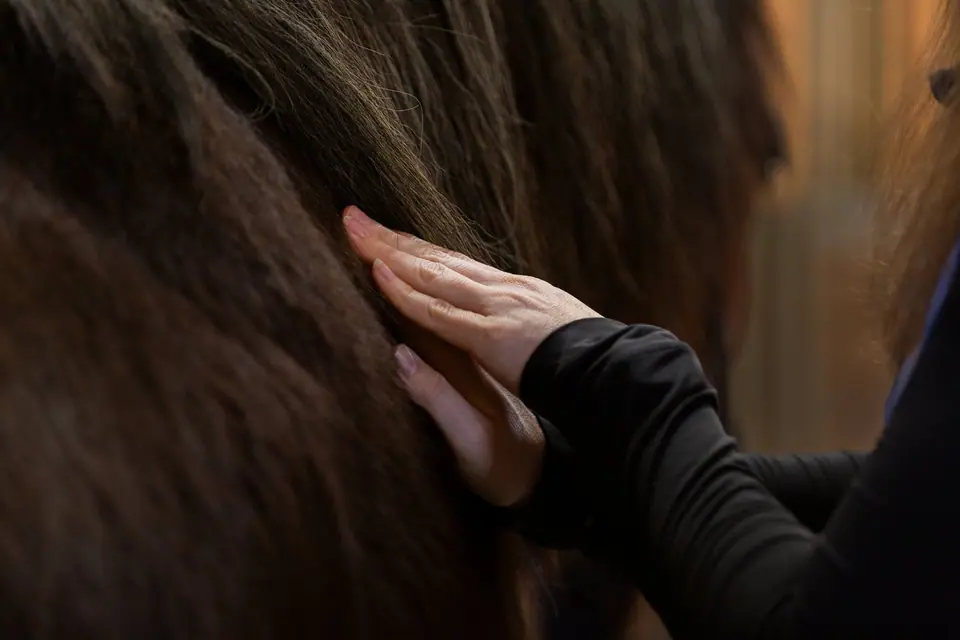
Trigger point therapy, also called sports massage, finds and releases trigger points: small, irritable spots in the muscle, often felt as knots. Trigger points can cause referred pain, which means the horse feels it somewhere other than the knot itself. A trigger point in the shoulder muscles, for example, might be felt in the neck or back.
The therapist applies focused pressure to each point to help the knot release. It's a great fit for horses with specific areas of tension or muscle spasm, which you see a lot in sport horses, to support their comfort and performance.
What Is the Masterson Method?
The Masterson Method was developed by Jim Masterson. It's a unique approach that puts the horse's responses and feedback at the center of the session, combining bodywork, stretching and movement to release tension and improve mobility. It involves:
- Gentle pressure: to encourage the horse to release tension on their own.
- Reading the horse: watching for responses like blinking, licking, chewing and shifting weight to find areas of tension and adjust the technique.
- Range of motion movements: passive movements of the limbs and joints to help flexibility.
It's especially good for building trust and communication between the horse and the therapist, which can lead to deep relaxation.
How Do I Choose Which Type of Equine Massage to Learn?
Find out what other bodyworkers in your area already offer, then choose a path that fills a gap. It's one of the best things you can do as an aspiring equine bodyworker. It makes you unique, and it means you'll help horses who aren't being served yet.
For example, lots of equine bodyworkers use the Masterson Method, which is wonderful for general relaxation. Performance horses with muscle spasms or knots often need more targeted work too, so in an area like that, trigger point therapy could be the gap you fill.
Equine massage supports a horse's wellbeing alongside veterinary care. It is not a substitute for it. Whatever you study, you'll learn to work with your clients' vets, not instead of them.